This morning the UK awakes to a new government. It arrives with an impressive parliamentary majority, but with little in the way of money or consensus to tackle the big challenges it faces, now should be the time to really get deliberative engagement on the agenda.
There are always tough choices in politics, that’s what it’s for – but there are going to be an awful lot of them for the new Labour government. Tough choices because the money to tackle big challenges will be tight; and tough choices because of the lack of consensus on the solutions to those challenges. So how can the new government hope to navigate those tough choices?
Inviting the public into the heart of those debates – to help make the difficult calls about costs and benefits, tensions and trade-offs – must now be part of the answer. That means developing the capacity of national, regional and local government to run deliberative processes on big questions.
The housing crisis and the climate crisis stand out as two obvious candidates. Both have been allowed to deepen over the last decade, generating growing public disquiet and myriad consequences, yet the potentially unpopular measures needed to tackle them too easily turn into placard-festooned controversies that strike fear into the hearts of politicians and thus get kicked down the road – locally and nationally. Most people recognise the need to build more housing or big infrastructure projects, but will usually find reasons why it shouldn’t happen in their area. Most people recognise that we need to decarbonise, but don’t want their car journeys made more costly or inconvenient.
With a few policy exceptions, politicians have so far bottled it on big issues like these, pretending that we can make the progress we need to without a radical change of gear – without some of us giving some things up. That pretence cannot survive for long, and so the government and their colleagues across the country will need to take some bold decisions to speed up housebuilding, decarbonisation and more. A big parliamentary majority won’t count for much if significant numbers of citizens aren’t on board. It is not hard to imagine, for instance, a ‘net zero backlash’ led by Reform UK and sections of the Conservative opposition when those bold decisions start to take shape.
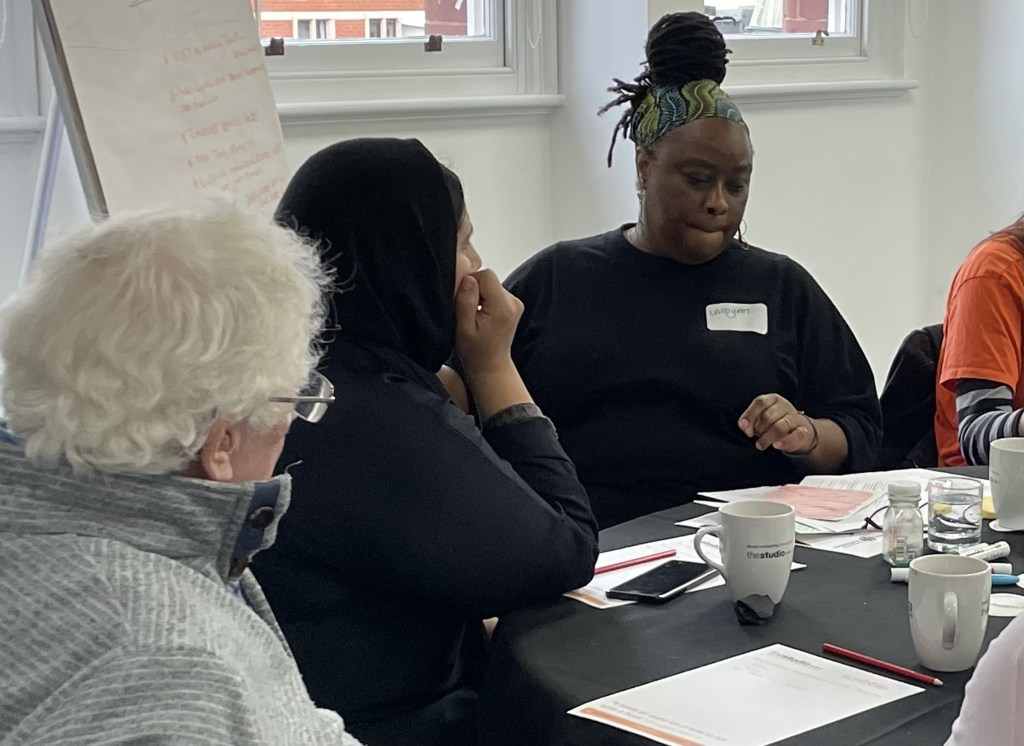
This is why we need to build a culture of deliberative democracy, bringing more public voices into decision-making and building consensus on the hard stuff. It is not enough to to hold clunky, tick-boxy consultation exercises which just invite people to loudly shout their opinion (and usually their opposition) without any obligation to consider the data, engage with others and weigh up different perspectives. It is not enough to host public engagement events that simply ask a group of people for their existing views on the topic. When it comes to the big questions, members of the public need to be given access to the facts; to experts who can explain those facts and propose some solutions; and to the necessary time and space to think through the implications of those different solutions together.
After designing and running several deliberative processes in the last few years, mostly for councils and mostly about the climate crisis, I can testify to a) the willingness of strangers to work together calmly and kindly, respecting different experiences and putting themselves into others’ shoes; b) people’s commitment to the process – to listening, learning and taking the job seriously as a kind of civic duty; c) people’s ability to ask insightful questions and understand complex topics, with the right support; and d) people’s readiness – at least sometimes – to reach conclusions which may inconvenience them personally but which, based on the evidence they have considered, they recognise are necessary for the greater good. It is an inspiring thing to see and should give us hope for how decisions can be made if only the system would more often enable it.
Run well, these processes could be incredibly powerful in helping our politicians grasp nettles that they have hitherto failed to grasp. By the end of this parliament, deliberative engagement should be a familiar, well-understood tool in our democratic, policy-making toolkit.
What is one of the things that participants in climate assemblies and panels most frequently say? ‘Why haven’t we been tackling this sooner? How has it been allowed to get so bad?’ That challenge – and in some cases anger – is an invitation for our leaders to stop obfuscating and to start working on these and other big issues in earnest, and with the public around the table from the start.
 Public Sphere